Caption Idea Best Caption
Small businesses have always been the backbone of economies around the world. They create jobs, drive innovation, serve local communities, and bring unique products and services to markets that larger corporations often overlook. But despite their importance and potential, small businesses face a persistent and daunting challenge: competing for attention and customers against bigger companies with significantly larger budgets and established brand recognition.
This is where digital marketing changes everything. The internet has created an unprecedented equalizer, giving small businesses access to the same audiences, platforms, and tools that were once exclusive to corporations with massive marketing departments and million-dollar advertising budgets. A well-executed digital marketing strategy can propel a small business from obscurity to prominence, from struggling to thriving, from local to global — all without requiring the kind of financial investment that traditional marketing demanded.
But simply having a website or posting occasionally on social media doesn’t constitute a digital marketing strategy. True growth requires understanding the digital landscape, selecting the right channels for your specific business, creating content that resonates with your target audience, and consistently executing tactics that build visibility, trust, and revenue over time.
This comprehensive guide explores how small businesses can harness the full power of digital marketing to accelerate growth. From foundational strategies to advanced techniques, you’ll discover actionable approaches that transform your online presence from a passive placeholder into an active growth engine.
Why Digital Marketing Is Essential for Small Business Growth
The shift from traditional to digital marketing isn’t merely a trend — it’s a fundamental transformation in how businesses connect with customers. Understanding why digital marketing matters provides the motivation and context for implementing it effectively.
The Playing Field Has Changed
Traditional marketing channels — television commercials, radio spots, print advertisements, billboards — require substantial financial investment that puts them beyond reach for most small businesses. A single television commercial can cost tens of thousands of dollars to produce and hundreds of thousands to air during prime viewing hours. Print advertisements in major publications demand similarly significant budgets.
Digital marketing dismantles these financial barriers. A compelling social media post costs nothing but time and creativity. An email marketing campaign reaches thousands of subscribers for pennies per message. A well-optimized blog post attracts visitors for years after publication without ongoing costs. Even paid digital advertising allows precise budget control, letting you start with as little as five dollars per day and scale based on results.
Your Customers Are Already Online
Consumer behavior has shifted decisively toward digital channels. The vast majority of purchasing decisions now begin with an online search. Consumers research products, compare prices, read reviews, and seek recommendations through digital platforms before making buying decisions — often before ever setting foot in a physical store or contacting a business directly.
Small businesses without a strong digital presence are effectively invisible to these consumers. When potential customers search for the products or services you offer and find your competitors instead of you, every missed impression represents lost revenue. Digital marketing ensures you appear where your customers are already looking.
Measurability Transforms Strategy
Traditional marketing suffers from a fundamental measurement problem. When you place a billboard along a highway, you can estimate how many drivers pass it daily, but you cannot measure how many actually noticed it, remembered your business, or ultimately made a purchase because of it.
Digital marketing provides granular, real-time data on virtually every aspect of your campaigns. You can track exactly how many people saw your advertisement, how many clicked on it, how long they spent on your website, which pages they visited, what actions they took, and whether they ultimately made a purchase. This data-driven approach enables continuous optimization, directing your limited budget toward tactics that demonstrably work and away from those that don’t.
Building Your Digital Marketing Foundation
Before pursuing specific tactics, establishing a solid foundation ensures every subsequent effort builds toward lasting growth rather than generating isolated, unsustainable results.
Define Your Target Audience with Precision
The most common mistake small businesses make in digital marketing is attempting to reach everyone. Broad targeting dilutes your message, wastes your budget, and produces mediocre results across the board rather than exceptional results within a focused segment.
Define your ideal customer in specific detail. Consider demographics like age, gender, income level, education, and location. Explore psychographics including values, interests, lifestyle, challenges, and aspirations. Understand their buying behavior — where they shop, how they research purchases, what influences their decisions, and what objections might prevent them from buying.
Create detailed buyer personas — fictional representations of your ideal customers — that guide every marketing decision. When you understand exactly who you’re speaking to, your messaging becomes more relevant, your channel selection becomes more strategic, and your results improve dramatically.
Establish a Professional Website
Your website serves as the central hub of your entire digital marketing ecosystem. Every other channel — social media, email, advertising, content marketing — ultimately drives traffic back to your website where conversions happen.
A professional website doesn’t require a massive budget. Modern website builders and content management systems like WordPress enable small businesses to create attractive, functional websites at minimal cost. However, certain elements are non-negotiable regardless of budget.
Your website must load quickly. Research consistently shows that visitors abandon websites that take more than three seconds to load. Every additional second of loading time increases bounce rates and decreases conversions.
Your website must be mobile-responsive. More than half of all web traffic comes from mobile devices. A website that displays poorly on smartphones frustrates mobile visitors and signals unprofessionalism.
Your website must communicate clearly. Visitors should understand within seconds what your business does, who it serves, and what action you want them to take. Cluttered designs, confusing navigation, and vague messaging drive visitors away regardless of how they arrived.
Your website must include clear calls to action. Every page should guide visitors toward a specific next step — making a purchase, requesting a quote, scheduling a consultation, subscribing to your email list, or contacting your business.
Claim and Optimize Your Google Business Profile
For small businesses serving local markets, a Google Business Profile is arguably the single most impactful digital marketing asset you can establish. This free listing determines how your business appears in Google Maps and local search results when nearby customers search for the products or services you offer.
A complete, optimized Google Business Profile includes accurate business information — name, address, phone number, website, and hours of operation. It features high-quality photographs of your business, products, and team. It contains a compelling business description incorporating relevant keywords. And it actively solicits and responds to customer reviews that build credibility and influence local search rankings.
Businesses with complete, active Google Business Profiles receive significantly more clicks, calls, and direction requests than those with incomplete or neglected profiles. The investment of time required to optimize this listing delivers outsized returns for local businesses.
Content Marketing: Attracting Customers Through Value
Content marketing involves creating and distributing valuable, relevant content that attracts and engages your target audience. Rather than interrupting potential customers with promotional messages, content marketing earns their attention by providing genuine utility — answers to their questions, solutions to their problems, insights they find valuable.
Blogging for Business Growth
A business blog serves multiple strategic purposes simultaneously. It improves your search engine visibility by creating pages that target keywords your customers search for. It establishes your expertise and authority within your industry. It provides shareable content for social media channels. And it gives potential customers reasons to visit your website repeatedly, building familiarity and trust over time.
Effective business blogging requires understanding what your target audience wants to know. Research the questions they ask, the problems they face, and the information they seek during their buying journey. Create content that addresses these needs comprehensively and genuinely.
Consistency matters more than frequency. Publishing one high-quality blog post per week delivers better results than publishing five mediocre posts. Quality content gets shared, earns backlinks from other websites, and ranks in search results — all of which compound over time into significant traffic growth.
Every blog post should include a clear call to action that moves readers further into your sales funnel. This might be subscribing to your email list, downloading a free resource, requesting a consultation, or exploring your products and services.
Video Content Marketing
Video has become the most engaging content format across virtually every digital platform. Consumers increasingly prefer watching videos to reading text, and platforms like YouTube, TikTok, Instagram Reels, and Facebook prioritize video content in their algorithms.
Small businesses can leverage video content without professional production budgets. Smartphone cameras produce excellent video quality. Free editing software enables professional-looking results. Authenticity often resonates more than polish — viewers appreciate genuine, relatable content from real business owners over slick corporate productions.
Effective video content for small businesses includes product demonstrations that showcase features and benefits, behind-the-scenes glimpses that humanize your brand, customer testimonial videos that build social proof, educational tutorials that establish expertise, and answer-format videos addressing common customer questions.
YouTube deserves particular attention as the world’s second-largest search engine. Videos optimized for relevant keywords can attract viewers for years after publication, building a content library that generates ongoing traffic and leads without continuous investment.
Podcasting as a Growth Channel
Podcasting has experienced remarkable growth in listenership and represents an underutilized opportunity for many small businesses. A podcast allows you to share expertise, tell your brand story, interview industry figures, and build intimate connections with an audience that listens during commutes, workouts, and daily routines.
The barrier to entry for podcasting is remarkably low. Basic recording equipment and free editing software enable professional-quality audio. Distribution through platforms like Apple Podcasts, Spotify, and Google Podcasts provides access to millions of potential listeners at no cost.
Podcasts build authority and trust through extended, conversational content that other formats cannot replicate. A listener who spends thirty minutes hearing you discuss industry topics develops a significantly deeper connection with your brand than one who reads a brief social media post.
Search Engine Optimization: Being Found When It Matters
Search engine optimization ensures your website appears prominently when potential customers search for the products, services, or information related to your business. For small businesses, organic search traffic represents one of the most valuable and sustainable customer acquisition channels available.
Local SEO for Small Businesses
Local SEO focuses on optimizing your online presence to attract customers from relevant local searches. When someone searches for a product or service near your location, local SEO determines whether your business appears in the results.
Beyond your Google Business Profile, local SEO involves ensuring your business name, address, and phone number are consistent across all online directories and listings. Inconsistencies confuse search engines and reduce your visibility in local results.
Build citations — mentions of your business on other websites — through industry directories, local business associations, chamber of commerce listings, and review platforms. Each consistent citation reinforces your business’s legitimacy and relevance to local searches.
Encourage satisfied customers to leave reviews on Google and other relevant platforms. Review quantity, quality, and recency all influence local search rankings while simultaneously building trust with potential customers evaluating your business.
On-Page SEO Fundamentals
On-page SEO involves optimizing individual web pages to rank higher for relevant keywords. Each page on your website should target specific keywords that potential customers use when searching for what you offer.
Include target keywords naturally in page titles, headings, body content, image descriptions, and meta descriptions. Avoid keyword stuffing — the practice of unnaturally cramming keywords into content — which search engines penalize rather than reward.
Create comprehensive content that thoroughly addresses the topic at hand. Search engines increasingly prioritize content that satisfies user intent — providing the information searchers actually want — over content that simply matches keyword patterns.
Ensure proper technical SEO fundamentals including fast loading speeds, mobile responsiveness, secure HTTPS connections, logical site structure, and descriptive URL formats. These technical factors influence search rankings while simultaneously improving user experience.
Building Authority Through Backlinks
Backlinks — links from other websites to yours — signal authority and trustworthiness to search engines. Websites with strong backlink profiles consistently outrank those without them for competitive search terms.
Small businesses can earn backlinks through creating exceptional content that others naturally reference, contributing guest articles to industry publications, participating in local business organizations that link to member websites, and building relationships with complementary businesses that result in reciprocal recommendations.
Quality matters far more than quantity in backlink building. A single link from a respected industry website provides more ranking value than dozens of links from irrelevant or low-quality sources.
Social Media Marketing: Building Community and Visibility
Social media platforms provide small businesses with direct access to potential customers in environments where they’re actively seeking content, recommendations, and connections. Strategic social media marketing builds brand awareness, fosters community, drives website traffic, and generates leads.
Choosing the Right Platforms
The temptation to maintain a presence on every social media platform leads to diluted effort and mediocre results. Instead, focus your energy on the platforms where your target audience is most active and where your content format strengths align with platform preferences.
Facebook remains valuable for local businesses, community building, and reaching broad demographics. Its advertising platform offers unmatched targeting capabilities for small budgets.
Instagram excels for visually oriented businesses — restaurants, retail, fashion, beauty, travel, fitness — where compelling imagery and short-form video showcase products and experiences.
LinkedIn serves business-to-business companies, professional services, and consultants targeting decision-makers in specific industries. Content on LinkedIn tends toward professional insights, industry analysis, and thought leadership.
TikTok has expanded beyond its initial young demographic to attract users across age groups who consume short-form video content. The platform’s algorithm actively promotes content from small creators, providing organic reach opportunities that more established platforms no longer offer.
Pinterest functions as a visual search engine particularly valuable for businesses in home decor, fashion, food, crafts, and wedding industries. Pins have significantly longer lifespans than posts on other platforms, continuing to drive traffic for months or years after publication.
Creating Engaging Content
Social media content that drives business growth goes beyond promotional posts announcing sales and products. The most effective social media strategies follow a content mix that balances value, entertainment, and promotion.
Educational content positions your business as an authority and provides genuine value to followers. Share tips, tutorials, industry insights, and answers to common questions your customers ask.
Behind-the-scenes content humanizes your brand by showing the people, processes, and passion behind your products and services. Customers connect with businesses they perceive as authentic and relatable.
User-generated content — photographs, videos, and testimonials shared by your customers — provides powerful social proof while reducing your content creation burden. Encourage customers to share their experiences and feature their content prominently.
Promotional content should comprise a minority of your overall posts. When you’ve established value and trust through other content types, promotional posts receive warmer reception and generate stronger results.
Community Engagement and Social Listening
Social media is inherently social — passive broadcasting without genuine engagement misses the medium’s greatest strength. Respond to comments, answer questions, acknowledge feedback, and participate in conversations relevant to your business.
Monitor mentions of your brand, products, competitors, and industry keywords across social platforms. This social listening reveals customer sentiment, competitive intelligence, market trends, and opportunities for timely engagement that builds relationships and demonstrates attentiveness.
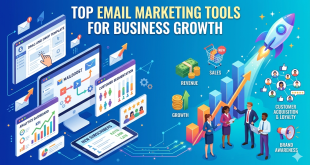
Email Marketing: Your Most Valuable Owned Channel
Email marketing consistently delivers the highest return on investment of any digital marketing channel. Unlike social media followers who may never see your posts due to algorithmic filtering, email subscribers receive your messages directly in their inboxes — a channel you own and control entirely.
Building Your Email List
Your email list represents a business asset that grows more valuable over time. Every subscriber is a potential customer who has expressed interest in your business by voluntarily providing their contact information.
Offer compelling lead magnets — free resources provided in exchange for email addresses — that align with your target audience’s interests and needs. Effective lead magnets include downloadable guides, checklists, templates, discount codes, exclusive content, free consultations, and access to webinars or workshops.
Place email signup opportunities prominently throughout your website, including dedicated landing pages, sidebar widgets, popup forms, and within blog content. Make the value proposition clear — tell potential subscribers exactly what they’ll receive and why it’s worth their email address.
Email Campaign Strategies
Welcome sequences introduce new subscribers to your business, share your story, deliver promised lead magnets, and establish expectations for future communications. These automated sequences run without ongoing effort once created, nurturing every new subscriber through a consistent onboarding experience.
Newsletter campaigns maintain regular contact with your audience, sharing valuable content, industry updates, and business news. Consistency matters — whether weekly, biweekly, or monthly, maintaining a reliable schedule keeps your business present in subscribers’ minds.
Promotional campaigns announce sales, new products, special offers, and events. Because email subscribers have already demonstrated interest in your business, promotional emails to this audience typically generate higher conversion rates than equivalent promotions through other channels.
Segmentation dramatically improves email effectiveness. Dividing your list into segments based on purchase history, interests, engagement level, or other criteria allows you to send targeted messages that resonate with specific groups rather than generic communications that partially interest everyone but fully engage no one.
Paid Digital Advertising: Accelerating Growth Strategically
While organic digital marketing builds sustainable long-term growth, paid advertising accelerates results and reaches audiences beyond your existing followers and subscribers.
Search Engine Advertising
Search advertising places your business at the top of search results for specific keywords, capturing the attention of consumers actively searching for what you offer. This intent-based targeting makes search advertising highly effective for generating immediate leads and sales.
Google Ads operates on a pay-per-click model where you only pay when someone actually clicks your advertisement. Budget controls allow small businesses to set daily or monthly spending limits that prevent overspending. Starting with a modest budget and gradually increasing spending on keywords that demonstrate positive returns enables controlled, data-driven growth.
Social Media Advertising
Social media advertising leverages the detailed demographic and behavioral data these platforms collect to deliver your messages to precisely defined audiences. The targeting capabilities available to small businesses today rival what only the largest corporations could access a decade ago.
You can target potential customers based on age, location, interests, behaviors, job titles, life events, and even their engagement with competitors’ content. This precision ensures your advertising budget reaches people most likely to become customers rather than being wasted on broad, unfocused audiences.
Start with small budgets across multiple ad variations to identify which messages, images, and audiences perform best. Scale spending toward winning combinations while pausing underperforming ads. This iterative testing approach maximizes returns on every advertising dollar.
Retargeting: Recovering Lost Opportunities
Retargeting displays advertisements to people who have previously visited your website but left without taking action. Since these visitors have already demonstrated interest in your business, retargeting campaigns typically achieve significantly higher conversion rates than campaigns targeting cold audiences.
A visitor who browsed your product pages but didn’t purchase might see your advertisement while scrolling through social media later that day, reminding them of their interest and encouraging them to return and complete their purchase. This gentle persistence converts visitors who needed additional exposure before committing.
Analytics and Continuous Optimization
Digital marketing’s greatest advantage over traditional marketing is measurability. Every click, view, conversion, and dollar spent generates data that informs smarter decisions.
Essential Metrics to Track
Monitor website traffic volume and sources to understand which channels drive the most visitors. Track conversion rates to identify how effectively your website turns visitors into customers or leads. Measure customer acquisition costs to ensure you’re spending less to acquire a customer than that customer is worth to your business.
Analyze engagement metrics across social media platforms to understand which content resonates with your audience. Monitor email open rates and click-through rates to gauge subscriber interest and optimize subject lines and content.
The Optimization Cycle
Digital marketing is not a set-and-forget activity. It requires continuous monitoring, analysis, and adjustment. Review your analytics regularly, identify what’s working and what isn’t, formulate hypotheses about improvements, test changes, measure results, and repeat the cycle.
This iterative approach ensures your marketing becomes increasingly effective over time. Small improvements compound — a ten percent increase in website conversion rate combined with a ten percent increase in traffic produces a twenty-one percent increase in results.
Conclusion
Digital marketing offers small businesses an unprecedented opportunity to compete, grow, and thrive in ways that were simply impossible before the internet democratized access to audiences and marketing tools. The strategies outlined in this guide — from content marketing and SEO to social media, email marketing, and paid advertising — provide a comprehensive framework for building a digital presence that drives real business growth.
The key to success lies not in implementing every tactic simultaneously but in starting with the channels most relevant to your business and audience, executing them consistently and well, measuring results honestly, and expanding your efforts as you gain confidence and see returns.
Every large business was once a small business that figured out how to grow. Digital marketing accelerates that journey like nothing before it. The tools are accessible, the strategies are proven, and the opportunity is available to every small business willing to invest the time and effort to seize it. Your competitors are already leveraging these channels. Your customers are already searching these platforms. The only question remaining is whether you’ll meet them there.
Start today. Start small. Start smart. And let digital marketing become the engine that drives your small business toward the growth you’ve always envisioned.