Caption Idea Best Caption
In the quiet hum of modern life, a revolution is unfolding—not in laboratories or corporate boardrooms, but in our living rooms, on our wrists, inside our refrigerators, and across the sprawling corridors of factories and city streets. It is a revolution of connectivity, of objects awakened from their passive existence into active, communicating participants in our digital world. This is the Internet of Things (IoT): the vast, growing ecosystem of physical devices embedded with sensors, software, and network connectivity that enables them to collect, exchange, and act upon data—often without any direct human intervention.
The numbers tell a compelling story. There are already billions of connected devices in operation worldwide, from the humble smart lightbulb to the sophisticated sensor array on an industrial robot. This number is projected to grow exponentially over the coming decade, as the cost of sensors continues to plummet, wireless connectivity becomes more ubiquitous, and cloud computing provides the scalable infrastructure to manage the deluge of data these devices generate. IoT is no longer a futuristic concept; it is a present reality that is quietly reshaping how we live, work, travel, receive healthcare, and interact with the world around us.
Yet for all its pervasiveness, the Internet of Things remains poorly understood by many people. It can feel abstract, technical, or even slightly intimidating. What exactly qualifies as an IoT device? How do these devices communicate? Who processes all that data, and where does it go? What are the risks? And what are the genuine, tangible benefits that justify the complexity and investment? This exploration seeks to answer these questions comprehensively, tracing the contours of IoT from its foundational principles to its most impactful everyday applications, and looking ahead to the extraordinary future that this technology is building.
The Foundational Idea: Objects That Can Speak and Listen
At its heart, the concept of the Internet of Things is elegantly simple: take any physical object, equip it with sensors that can perceive the world around it, give it the ability to communicate over a network, and you have an IoT device. The “things” in the Internet of Things can be virtually anything—a wristwatch, a tractor, a hospital bed, a shipping container, a streetlight, a bridge, or a human body.
What makes a device “smart” or “connected” is the integration of three fundamental capabilities:
Sensing: The ability to gather data from the physical environment. This is accomplished through an ever-expanding array of sensor types: temperature and humidity sensors, motion detectors, accelerometers, GPS modules, cameras, microphones, pressure gauges, chemical detectors, biosensors that measure heart rate or blood glucose, vibration sensors, and many more. Each sensor type translates a specific physical phenomenon into a digital signal that can be processed and transmitted.
Connectivity: The ability to transmit data to other devices, systems, or users. The connectivity landscape for IoT is diverse, with different technologies suited to different use cases. Wi-Fi offers high bandwidth for home and office environments. Bluetooth and its low-energy variant (BLE) provide short-range connectivity ideal for wearables and accessories. Cellular networks (including specialized low-power variants like NB-IoT and LTE-M) enable wide-area connectivity for vehicles, trackers, and remote installations. Mesh networking protocols like Zigbee and Z-Wave create self-organizing networks of interconnected devices. Long-range, low-power protocols like LoRaWAN enable battery-powered sensors to operate for years across vast distances, making them ideal for agricultural and city-scale applications.
Actuation and Intelligence: The ability to not just collect and transmit data, but to act upon it. An IoT device might control a valve, dim a light, lock a door, sound an alarm, or adjust a machine’s operating parameters—all in response to data it has collected or received. Increasingly, this intelligence is being embedded directly into the devices themselves through edge computing and on-device machine learning, allowing for faster, more private, and more reliable decision-making without always relying on a central server.
The Architecture of IoT: From Device to Insight
To understand how IoT creates value, it is helpful to trace the journey of data through a typical IoT system:
Device Layer: At the foundation are the physical devices themselves—the sensors, actuators, and smart objects that interact with the physical world. A temperature sensor in a cold storage warehouse, a GPS tracker on a delivery truck, or a heart rate monitor in a smartwatch all operate at this layer, continuously gathering raw data from their environment.
Connectivity Layer: Data generated at the device layer must be transmitted to where it can be processed and acted upon. This layer encompasses all the wireless and wired communication technologies that carry IoT data—from the local Wi-Fi network in your home to the cellular tower that relays data from a remote agricultural sensor to the cloud.
Edge Computing Layer: In many IoT architectures, a layer of local processing exists between the devices and the cloud. Edge computing—the processing of data at or near its source—offers several critical advantages. It dramatically reduces latency, enabling near-instantaneous responses. It reduces the volume of data that must be transmitted to the cloud, saving bandwidth and cost. It enhances privacy by keeping sensitive data local. And it improves resilience, allowing devices to continue functioning even when internet connectivity is interrupted.
Cloud Layer: Cloud platforms serve as the central nervous system of large-scale IoT deployments. They aggregate data from potentially millions of devices, provide scalable storage and computational resources for complex analytics, host the machine learning models that generate predictions and recommendations, and enable the integration of IoT data with enterprise software systems like ERP and CRM platforms.
Application Layer: This is where humans interact with the IoT system—through mobile apps, web dashboards, voice interfaces, and automated alerts. It is also where IoT data is translated into tangible business or personal value: an energy manager reviewing building consumption dashboards, a doctor monitoring a remote patient’s vital signs, or a homeowner receiving an alert that their water heater is showing signs of failure.
Smart Homes: The Most Visible IoT Application
For most consumers, the smart home is the most visible and personally relevant application of IoT technology. The modern connected home is an ecosystem of interoperating devices that collectively make living spaces more comfortable, secure, efficient, and convenient.
Smart Thermostats: Devices like the Google Nest Thermostat or Ecobee represent IoT at its most elegantly useful. These devices learn your schedule, preferences, and the thermal characteristics of your home over time, automatically optimizing heating and cooling for both comfort and energy efficiency. They can detect when you’ve left home using geofencing, shifting to an energy-saving mode, and begin warming or cooling the house before you return. Users typically report significant reductions in their heating and cooling bills—often 10 to 20 percent or more.
Smart Lighting: Connected lighting systems allow for granular control of every light in a home through apps, voice commands, or automation rules. Schedules, motion triggers, and integration with other smart home devices enable scenarios like lights that automatically dim when a movie starts, or that gradually brighten to simulate sunrise and gently wake you in the morning. Beyond convenience, smart lighting enables meaningful energy savings through precise scheduling and occupancy-based control.
Home Security and Monitoring: Smart security cameras, video doorbells, motion sensors, door and window contact sensors, and smart locks together create a comprehensive, remotely accessible security system. Unlike traditional alarm systems, modern smart security devices provide rich, real-time information: you can see who is at your front door from anywhere in the world, receive an alert if a window opens while you’re away, or lock a door you forgot to secure remotely. Emerging AI capabilities are enhancing these systems further, enabling cameras to distinguish between a family member, a delivery driver, an unfamiliar person, or an animal, dramatically reducing false alerts.
Leak and Environmental Sensors: Among the most quietly impactful smart home IoT devices are leak detectors, smoke detectors, and carbon monoxide monitors. A water leak sensor placed beneath a dishwasher or near a water heater can alert a homeowner to a developing leak long before it causes significant damage—potentially saving thousands of dollars in repairs. Similarly, smart smoke and carbon monoxide detectors can alert you via phone even when you’re not home, enabling a faster emergency response.
Smart Appliances: The connected home extends to major appliances. Smart washing machines can be started remotely or programmed to run during off-peak electricity hours. Smart refrigerators can inventory their contents, suggest recipes, and alert you when food is approaching its expiration date. Smart ovens can be preheated remotely or controlled by voice. While the value of some “smart” appliance features can feel incremental, the cumulative effect of these conveniences represents a meaningful improvement in household efficiency and quality of life.
Wearable Technology: IoT on the Body
Wearable devices represent a uniquely intimate application of IoT, placing sensors directly on or in the body to monitor health, fitness, and activity. Smartwatches from Apple, Samsung, and Garmin pack an extraordinary array of sensors into a device worn on the wrist: accelerometers, gyroscopes, optical heart rate sensors, electrocardiogram (ECG) electrodes, blood oxygen sensors, skin temperature sensors, and microphones. These devices continuously monitor a rich spectrum of physiological signals, building a detailed picture of the wearer’s health, fitness, and daily activity.
The impact on personal health management is profound. Continuous heart rate monitoring can detect irregular rhythms like atrial fibrillation—a potentially life-threatening condition—during the course of a normal day, prompting the wearer to seek medical evaluation before a crisis occurs. Sleep tracking provides insights into sleep quality, duration, and stages that can inform lifestyle changes to improve rest and overall health. Activity tracking motivates movement through challenges, goal-setting, and progress feedback. And an expanding suite of metrics—from stress levels derived from heart rate variability to menstrual cycle tracking and blood glucose trends—is turning the humble wrist device into a powerful personal health sentinel.
Beyond consumer wearables, the healthcare industry is deploying clinical-grade wearable IoT devices for remote patient monitoring. Patients with chronic conditions like heart failure, diabetes, or COPD can wear devices that continuously transmit vital signs and other health metrics to clinical teams, enabling proactive intervention when warning signs appear. This not only improves patient outcomes but also reduces costly and disruptive hospital admissions.
Industrial IoT: The Highest-Value Application
While consumer IoT captures the public imagination, the most economically significant applications of the Internet of Things are unfolding in industrial settings. Industrial IoT (IIoT) is transforming manufacturing, energy, logistics, agriculture, and infrastructure management with the potential to generate trillions of dollars in economic value.
Predictive Maintenance: This is arguably the highest-value IIoT application. In traditional industrial settings, equipment is either repaired reactively (after it breaks down, causing costly unplanned downtime) or maintained on fixed preventive schedules (which can result in unnecessary maintenance of healthy equipment). IIoT enables a third approach: predictive maintenance. Vibration sensors, acoustic sensors, temperature gauges, and pressure monitors on machinery feed data continuously to machine learning models that detect subtle patterns indicating developing faults. Maintenance is then scheduled precisely when needed—before failure occurs—dramatically reducing both unplanned downtime and unnecessary maintenance costs.
Digital Twins: A digital twin is a real-time virtual model of a physical asset, system, or process, continuously updated with data from IoT sensors. Digital twins enable engineers to monitor the state of complex equipment, simulate the effects of changes before implementing them, optimize operating parameters, and predict future performance or failure. They are used across industries from manufacturing and energy to aerospace and urban infrastructure.
Quality Control: IoT sensors and computer vision systems enable continuous, automated quality monitoring throughout the manufacturing process. Defects can be detected and rejected in real-time, before reaching the customer, reducing waste and improving product consistency. Machine learning models can identify subtle patterns in production data that predict quality issues, enabling proactive adjustments to process parameters.
Supply Chain Visibility: IoT provides end-to-end visibility across global supply chains. GPS trackers report the location and status of shipments in real-time. Temperature and humidity sensors ensure that cold chain integrity is maintained for perishable goods and pharmaceuticals. RFID technology enables precise, automated tracking of individual items through warehouses and distribution centers. This visibility reduces losses, improves responsiveness, and enables the kind of data-driven supply chain optimization that was previously impossible.
Smart Cities: IoT at the Urban Scale
The Internet of Things is also being applied at the scale of entire cities, enabling urban governments to operate infrastructure more efficiently, improve public services, and enhance quality of life for residents.
Smart Traffic Management: IoT sensors embedded in roads, intersections, and traffic lights collect real-time data on vehicle flow. This data feeds algorithms that dynamically adjust signal timing to optimize traffic flow, reduce congestion, and minimize emissions from idling vehicles. Connected vehicles contribute their GPS data to the same system, providing an even richer picture of traffic conditions.
Smart Street Lighting: Connected streetlights can automatically adjust their brightness based on ambient light conditions and the presence of pedestrians or vehicles, saving significant energy while maintaining safety. They can also monitor their own health, reporting failures automatically and enabling efficient maintenance routing.
Waste Management: Smart bins equipped with fill-level sensors transmit their status to waste management systems. Collection routes can then be dynamically optimized to collect only bins that actually need emptying, rather than following fixed schedules regardless of fill levels. This reduces the cost and emissions associated with waste collection while improving service reliability.
Environmental Monitoring: Networks of IoT sensors measure air quality, noise levels, temperature, humidity, and water quality across a city in real-time. This data enables authorities to identify pollution hotspots, track the effectiveness of environmental interventions, issue health alerts, and make evidence-based decisions about urban planning and transportation policy.
Smart Water Management: IoT pressure sensors and flow meters in water distribution networks can detect leaks—a major source of water loss in cities—in real-time. Automated shut-off valves can isolate detected leaks while repair teams are dispatched, minimizing water waste and property damage. Smart irrigation systems in public parks and green spaces adjust watering schedules based on soil moisture levels and weather forecasts, significantly reducing water consumption.
Agriculture: IoT in the Fields
Precision agriculture represents one of the most impactful applications of IoT, addressing the critical global challenge of feeding a growing population while minimizing the environmental impact of farming.
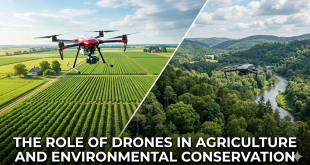
Soil moisture sensors guide irrigation systems to deliver precisely the right amount of water to each section of a field, rather than applying uniform irrigation regardless of actual need. This can reduce agricultural water consumption by 30 to 50 percent while improving crop yields. Weather stations provide hyperlocal meteorological data that informs planting decisions, frost warnings, and harvest timing. Livestock tracking and health monitoring systems alert farmers to animals that are sick, injured, or in distress. Drone-based imaging captures detailed aerial imagery that, analyzed by machine learning models, can identify crop stress, nutrient deficiencies, and pest infestations at an early stage, enabling targeted interventions.
The Challenges: Security, Privacy, and Interoperability
For all its transformative promise, the Internet of Things introduces significant challenges that must be thoughtfully addressed.
Security: IoT dramatically expands the attack surface of every network it touches. Every connected device is a potential entry point for malicious actors. Early IoT devices were often designed with minimal security—default passwords, unencrypted communications, no provision for firmware updates—and many of these vulnerabilities persist in deployed devices today. High-profile incidents, such as the Mirai botnet attack that hijacked hundreds of thousands of insecure IoT devices to launch massive distributed denial-of-service attacks, illustrate the real-world consequences of inadequate IoT security. Addressing this challenge requires a comprehensive approach: security-by-design at the device level, robust network segmentation, strong authentication mechanisms, regular firmware updates, and ongoing vigilance.
Privacy: The intimate nature of many IoT applications—devices in our homes, on our bodies, tracking our movements and monitoring our health—raises profound privacy concerns. The data generated by these devices can reveal extraordinarily sensitive information about our lives, routines, health conditions, and behavior. Who has access to this data? How long is it retained? Can it be sold to third parties or subpoenaed by governments? These questions demand clear, transparent privacy policies, meaningful user consent, robust data governance frameworks, and regulatory oversight.
Interoperability: The IoT ecosystem has historically been fragmented, with devices from different manufacturers using different communication protocols and often refusing to work together seamlessly. This creates frustrating user experiences and limits the potential of IoT to deliver its full value through integrated, cross-device automation. The emergence of the Matter standard—a universal connectivity protocol developed collaboratively by Apple, Google, Amazon, and Samsung—represents a major step toward resolving this fragmentation in the smart home space, but interoperability challenges persist across many IoT domains.
Data Management: The volume of data generated by large-scale IoT deployments is staggering. Managing, storing, processing, and deriving value from this data torrent is a significant technical and organizational challenge. Without appropriate data management strategies, analytics capabilities, and AI tools, IoT data can quickly become an overwhelming noise rather than a source of actionable insight.
The Future of IoT: Intelligence at the Edge and Beyond
The trajectory of IoT points toward a future of even more pervasive, capable, and intelligent connectivity. Several key trends are shaping this evolution.
The integration of artificial intelligence with IoT—sometimes called AIoT—is enabling devices to become genuinely intelligent at the edge, making sophisticated decisions locally without requiring cloud connectivity for every interaction. This makes IoT systems faster, more resilient, more private, and capable of operating in environments with limited connectivity.
The rollout of 5G networks is providing the ultra-low latency, high bandwidth, and massive device density that will unlock new IoT applications, particularly those requiring real-time responsiveness—autonomous vehicles, remote surgical robots, immersive mixed reality experiences, and ultra-dense smart city sensor networks.
Digital twins will become more prevalent and sophisticated, providing real-time virtual representations of everything from individual machines to entire city systems, enabling unprecedented levels of simulation, optimization, and predictive management.
And as IoT permeates more aspects of critical infrastructure—power grids, water systems, transportation networks, healthcare—the importance of security, resilience, and governance will only intensify, driving the development of more robust standards, regulations, and best practices.
Conclusion: A World Awakened
The Internet of Things is, at its essence, the awakening of the physical world. It is the process by which the objects and environments that surround us are given the gift of perception and communication—the ability to sense, to share, and in some cases, to act. It is transforming the home into a responsive, intelligent environment; the factory into a self-monitoring, self-optimizing system; the city into an adaptive, data-driven organism; and the human body into a continuously monitored health system.
The benefits are real and tangible: energy savings, improved safety, better health outcomes, more efficient cities, more productive industries, and a higher quality of daily life. The challenges—security, privacy, interoperability, and data management—are equally real and must be confronted with the same seriousness of purpose.
We are still in the early chapters of the IoT story. As sensor costs continue to fall, connectivity becomes more ubiquitous, and artificial intelligence more capable, the Internet of Things will continue to expand its reach, weaving an ever-denser fabric of connectivity into the physical world. The connected world is not coming; it is already here. And learning to understand, embrace, and thoughtfully govern it is one of the defining challenges and opportunities of our age.